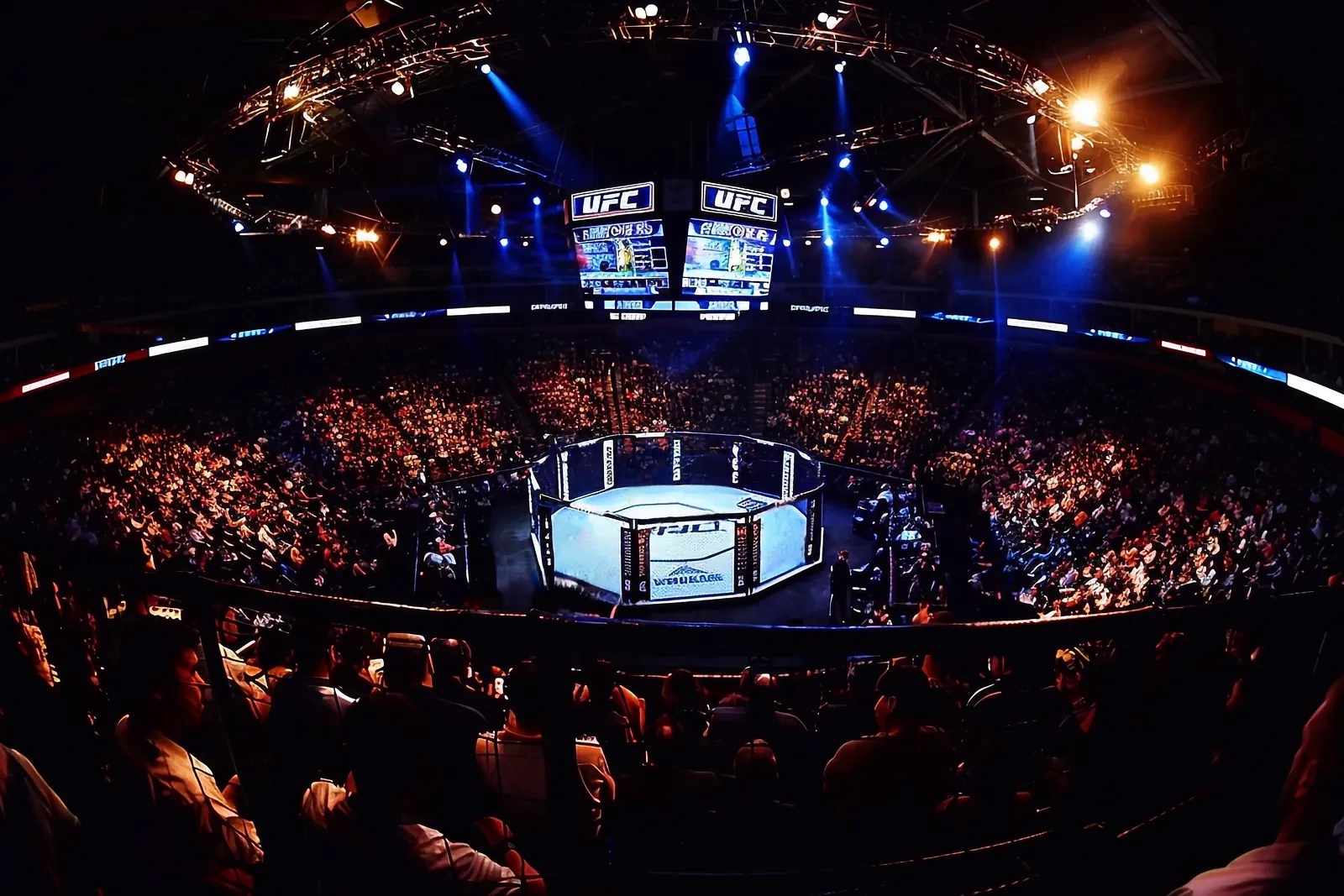
The GCC fight calendar has shifted into a gear that would have been unthinkable a decade ago. Two annual UFC cards now anchor Abu Dhabi’s winter and autumn schedule. A relentless amateur circuit churns out fresh talent across the Emirates every few weeks. The region has increasingly developed its own fight culture.
For the fan holding a phone and trying to plan a weekend, the sheer volume of options can feel like a sprawl. A numbered UFC pay-per-view lands in October, and a Fight Night lands in August. UAE Warriors runs a Thursday card on Yas Island, and the national amateur series pops up in five separate months. This calendar cuts through the noise and lays out exactly what is confirmed, where it happens and why each event matters.
The UFC’s Twice-Yearly Abu Dhabi Residency
The UFC and Abu Dhabi’s Department of Culture and Tourism extended their partnership into something genuinely unprecedented. Instead of a single annual visit, the promotion now delivers two distinct fight cards every year at Etihad Arena. One is a numbered pay-per-view event and the other is a Fight Night. They serve very different purposes for the roster and the audience.
A numbered event like UFC 308, which took place on 26 October 2024, carries championship stakes. Recent Yas Island history bears this out. Khabib Nurmagomedov submitted Dustin Poirier there, Islam Makhachev turned back Alexander Volkanovski, and Israel Adesanya handled Paulo Costa. These cards are built around champions and top-five contenders, which means the crowd sees the promotion’s most prized assets under the brightest lights.
The Fight Night card, introduced on 3 August 2024, operates on a different logic. No titles change hands. Instead, the main event spotlights rising contenders who need a signature win to break into the title conversation. From a regional standpoint, the real draw is the local talent. GCC-based fighters who might never get a US or Europe slot find their way onto this card, which turns the Etihad Arena into a proving ground for the Middle East’s own prospects.
What Separates a Fight Night from a Numbered Card
The distinction matters when you are deciding which ticket to buy. A numbered event guarantees household names, championship drama and the full pay-per-view production apparatus. The atmosphere is electric but the price point reflects the stakes. A Fight Night offers a more intimate look at the sport’s future, with hungry fighters who treat every round as an audition.
You are unlikely to see Islam Makhachev or Valentina Shevchenko headline a Fight Night. Those slots go to athletes who need a breakout performance. The undercard often features regional qualifiers and short-notice replacements, which sometimes produces the most memorable scraps of the evening. For the fan who studies the rankings, a Fight Night is a scouting trip.
UAE Warriors and the Domestic Professional Scene
While the UFC commands global attention, UAE Warriors remains the backbone of the domestic professional circuit. The promotion runs regular cards that blend international signings with homegrown talent. Its Thursday night slots have become a fixture for the Yas Island crowd. The 2026 calendar confirms UAE Warriors 74 on Thursday 22 October, headlined by a strawweight bout between Lany Silva and Michele Oliveira.
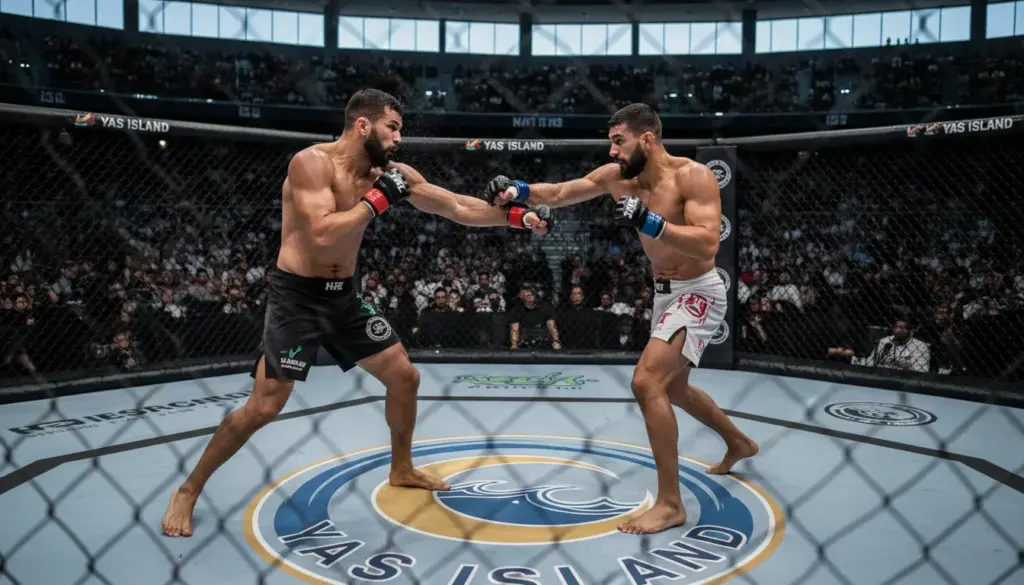
UAE Warriors cards typically feature a mix of established regional names and debuting prospects. The promotion aims to match fighters competitively. This approach helps build experience for local talent while keeping audiences engaged throughout the night. For the fan who wants to see the next generation before they sign with a major global promotion, these Thursday shows are essential viewing.
The October date sits strategically between the two UFC cards, giving fight fans a sustained season of live MMA. Someone who attends the August Fight Night can return in October for UAE Warriors. They can then come back again for the numbered UFC event. This effectively books three high-level fight weekends in a single calendar stretch. That density of programming is relatively new in the Gulf.
The Amateur Circuit and National Championships
Beneath the professional cards runs an active amateur system. The UAE National MMA Championship operates under the UAEMMAF banner and runs across five rounds in 2026. Confirmed dates are in January, February, April, August and December. These tournaments feed the professional ranks and give young athletes a structured pathway from the gym to the cage.
The championship uses a bracket format that rewards activity. Fighters who compete across multiple rounds accumulate experience and ranking points, which eventually translate into professional opportunities. The February round, scheduled for the 22nd and 23rd, serves as an early-season test for athletes coming off a winter training camp. The July round, set for the 11th and 12th, catches fighters in peak mid-year condition.
For the spectator, amateur cards offer a raw, unpolished version of the sport that often delivers more drama than slick professional productions. The fighters have not yet learned to fight safe. They take risks, they gas out, they stage improbable comebacks. Admission is typically free or low-cost, and the venues are intimate enough that you can hear corner instructions and the thud of shin on ribs.
Key Amateur Dates for the 2026 Season
The table below lists the confirmed rounds of the UAE National MMA Championship for the coming year. These dates are subject to venue confirmation. Fighters register through the Smoothcomp platform, which is the official tournament management system used for these events. Brackets are released before each event, giving competitors time to review their matchups.
| Championship Round | Dates | Typical Venue |
|---|---|---|
| Round 1 | January 2026 | Abu Dhabi |
| Round 2 | February 2026 | Dubai |
| Round 3 | April 2026 | Sharjah |
| Round 4 | August 2026 | Abu Dhabi |
| Round 5 | December 2026 | Dubai |
Fighters who intend to compete should check the UAEMMAF website for registration windows. The organisation uses Smoothcomp for bracket management, and athletes need an active membership to appear on the card. This platform also handles rankings and event listings for the national MMA community. Spectators can usually walk in on the day, though some rounds may fill up early.
PFL, Boxing Crossovers and the Wider Combat Landscape
The GCC combat calendar now extends well beyond pure MMA. The Professional Fighters League has planted a flag in Dubai, bringing its season-based format to the region. Unlike the UFC’s one-night tournament model, PFL runs a regular season, playoffs and championship. This structure means a Dubai card could be a qualifying round with genuine stakes attached to every bout, adding a distinct layer of competitive drama for local fans.
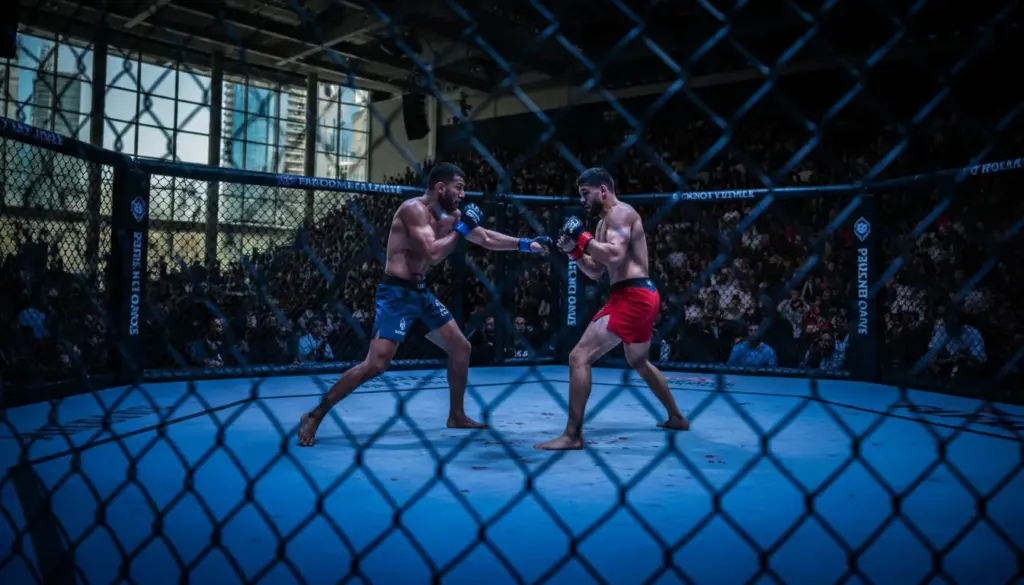
Boxing and crossover events have also found a home in the Gulf. The Jake Paul versus Cédric Doumbé matchup generated significant regional buzz, and more such spectacles are in discussion. These events draw a different crowd than traditional MMA cards, but they contribute to the same ecosystem. A fan who shows up for a YouTube-boxer crossover might leave curious about the next UAE Warriors card.
RAF Abu Dhabi rounds out the calendar with its own distinct identity. The promotion runs smaller, club-level shows that serve as a bridge between the amateur championships and the professional ranks. For a fighter who has performed well in the national series, a RAF card is the logical next step. For a fan, it is a chance to see prospects at the exact moment they turn the corner.
Planning Your Fight Year
The smart approach is to anchor your calendar around the two UFC dates and then backfill with the domestic cards that interest you. The August Fight Night and the October numbered event are the tentpoles, with the latter typically featuring championship bouts and the biggest stars. UAE Warriors 74 lands right between them, creating a concentrated season of high-level MMA from late summer through autumn. This scheduling allows fans to enjoy a steady flow of action, from rising local talents to world-class title fights.
If you prefer the grassroots energy, the five national championship rounds give you a fight card roughly every two months. The January and February rounds make for a busy start to the year, while the December championship offers a year-end finale before the holiday break. Whichever path you choose, the days of waiting for a single annual event are firmly behind us. The GCC now runs a year-round fight calendar, and it is only getting denser.